
Share:
When it comes to choosing a home heating oil delivery service, reliability should be at the forefront of your considerations. It’s crucial to select a service provider, like OK Petroleum, known for its dependability in delivering heating oil, come rain or shine. Their consistency in supply and adherence to delivery schedules provide a sense of security and peace of mind.
In addition to this, it’s essential to consider the provider’s ability to manage emergencies effectively. Emergencies and unforeseen situations can arise anytime, and a reliable provider should be equipped to handle such scenarios. A solid track record of managing crisis situations ensures you always keep a heat source in your home.
A cost-effective home heating oil delivery service is essential for managing your household expenses effectively. When selecting a service, opt for providers like OK Petroleum, that offer transparent pricing without hidden charges. This transparency allows you to budget effectively for your heating needs without any unpleasant surprises down the line.
Another element to consider is the pricing options that your provider offers. Many service providers offer price caps or budget plans, which can be beneficial for managing costs. It’s worth noting, however, that a low price should always maintain the quality of the service and the product. Opt for a provider that balances affordability with quality and reliability.
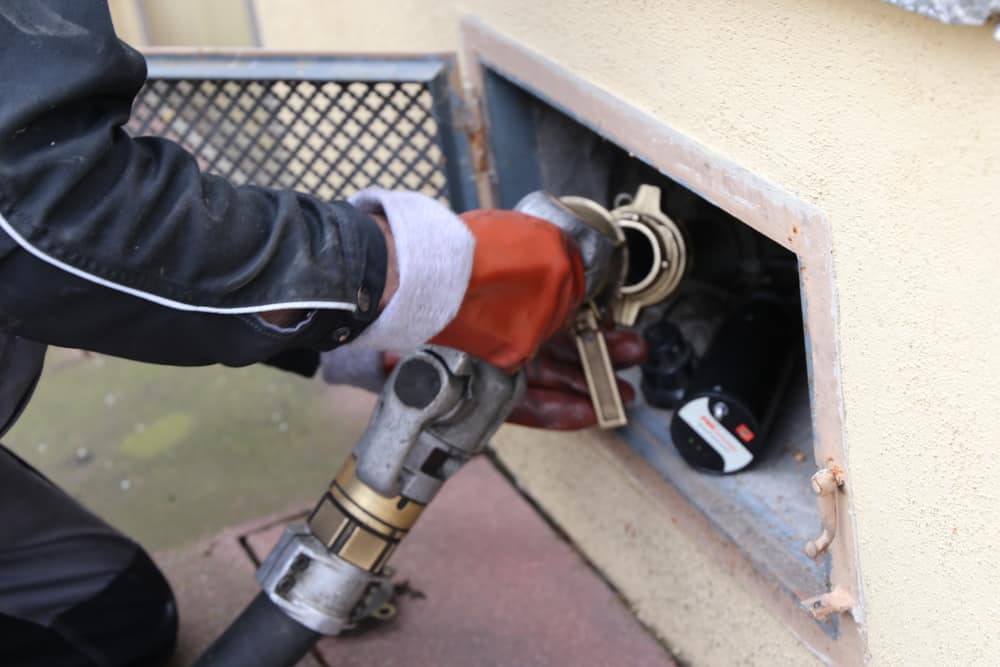
In today’s environmentally conscious world, eco-friendliness is a key consideration when choosing your home heating oil provider. Many service providers now offer options such as low-sulfur or biofuel-based heating oil, which burn cleaner and contribute less to environmental pollution. OK Petroleum is one such provider, demonstrating its commitment to environmental stewardship through its offerings.
In addition to being good for the environment, these eco-friendly options can also be more efficient, which could lead to lower heating costs in the long run. Therefore, choosing a service provider that prioritizes environmental responsibility can benefit both the planet and your wallet.

The quality of customer service offered by a heating oil delivery provider can be a distinguishing factor in your choice. A good service provider should be responsive, approachable, and dedicated to addressing your concerns. OK Petroleum prides itself on offering superior customer service with a team ready always to assist you.
Prompt communication and availability during emergencies are critical aspects of good customer service. This means your provider should be accessible and responsive when needed. This accessibility can provide a significant relief, especially in urgent situations or during peak heating seasons when demand is high.
Beyond heating oil delivery, a full-service provider should also offer technical support and maintenance services. Companies like OK Petroleum understand the importance of ensuring the efficiency and longevity of your heating system. Regular check-ups and preventive maintenance can keep your heating system running smoothly and avoid unexpected breakdowns.
Timely repairs are also an essential aspect of these services. When issues do arise, having a team ready to provide quick and effective solutions can save you from discomfort and inconvenience. These added services ensure the efficiency of your heating system and extend its lifespan, offering you excellent value for your investment.
The financial aspects of a home heating oil delivery service are another crucial consideration. OK Petroleum, for instance, provides a variety of payment options tailored to fit different financial needs and budgets. The ability to choose from prepayment and budget plans can provide flexibility and financial ease.
In addition to providing various payment plans, some service providers also offer price protection plans. These can be particularly beneficial during periods of price volatility, ensuring you avoid sudden spikes in heating costs. Considering these financial aspects can help alleviate stress and provide predictability in your heating expenses, particularly during peak heating season.
Summary:
Most Nassau County homeowners don’t spend a lot of time thinking about heating oil — until they have to. Then it’s usually because the gauge is lower than expected, the weather just turned, and the question of “when did I last order?” is suddenly very relevant.
If you’re weighing automatic oil delivery against will-call, you’re not alone. Both options work. Both have real trade-offs. And the right choice genuinely depends on your schedule, your habits, and how much mental bandwidth you want to spend on fuel management. Here’s what you actually need to know.
Automatic delivery isn’t a static schedule where a truck shows up every four weeks regardless of conditions. At OK Petroleum Distribution, it’s a predictive system. We track your historical consumption, factor in your home’s size and tank capacity, and monitor outdoor temperatures using degree-day calculations — a standard industry method for measuring how hard your heating system is working on any given day.
When our model projects that your tank will reach roughly a quarter full before the next natural delivery window, we schedule a fill. You don’t call. You don’t check the gauge. The delivery happens before you’d ever notice the tank getting low. For most Nassau County households, that works out to roughly one delivery every four weeks during the heating season.
Running out of heating oil isn’t just inconvenient — it triggers a chain of problems that most homeowners don’t anticipate until they’re dealing with them.
The first is a furnace lockout. When the tank runs dry, air gets pulled into the fuel line, and the burner shuts itself off as a safety measure. Getting it running again requires a professional to bleed the line, prime the system, and restart the burner. That service call alone adds cost on top of whatever you’re paying for emergency fuel.
The second problem is sediment. The bottom of every oil tank accumulates sludge over time. Under normal operating conditions, the fuel intake sits above that layer and it stays undisturbed. When the tank runs dry, the system pulls from the very bottom — dragging sediment into the fuel line, the filter, and the burner components. A single service call to clean clogged components can run $200 to $400. A full system cleaning can reach $500 to $800.
The third problem is pipe freezing. If your heating system goes down during a cold snap and the house drops below freezing, you’re not just dealing with a cold home. A single crack in a frozen pipe can release 250 gallons of water into your home in a day. That’s not a heating oil problem anymore — that’s a structural one.
Understanding what “running out” actually means helps you weigh the real risk of will-call management before you commit to monitoring it yourself.
Will-call works well when you’re home often enough to monitor your tank, disciplined enough to order before you’re in the danger zone, and willing to track the market closely enough to time your purchases. For some homeowners, that’s genuinely realistic. For a lot of Nassau County households, it isn’t.
This is a county built around the commute. Tens of thousands of residents are out of the house early and back late, five days a week, via the LIRR or the expressway. Weekends fill up fast. Checking the oil tank gauge is the kind of task that gets pushed to “this weekend” for three weekends in a row — and then it’s January, temperatures have dropped overnight, and you’re calling for emergency delivery on a Sunday.
Emergency delivery typically costs up to 50% more than a standard delivery. That surcharge alone can wipe out any per-gallon savings you might have captured by timing your will-call orders strategically. The math on will-call looks better in theory than it tends to play out in practice for households that are genuinely stretched for time.
That said, will-call isn’t the wrong choice for everyone. If you work from home, check your tank regularly, and like the flexibility of shopping around for price — it can absolutely be the right fit. The point isn’t that automatic delivery is always better. It’s that the lifestyle requirements of will-call are real, and worth being honest about before you commit to managing it yourself.
One of the most common concerns about automatic delivery is budget control — specifically, the fear that if you’re not placing each order yourself, you’re handing over control of your heating costs. It’s a reasonable instinct. But the payment structure you choose matters just as much as the delivery model.
We offer several ways to manage the financial side of heating oil: prepayment, budget plans, and price protection plans. Each one works differently, and each pairs with both automatic and will-call delivery in its own way.
A budget plan spreads your expected annual heating cost across equal monthly payments, so you’re not absorbing the full cost of a large winter delivery in one billing cycle. It smooths out the seasonal spike that catches a lot of homeowners off guard when January arrives and the tank needs a full fill. The monthly amount is calculated based on your estimated usage for the season, and it’s reconciled at the end of the year.
A price protection plan works differently — it caps the per-gallon price you’ll pay, regardless of what the market does. On Long Island, heating oil prices can shift meaningfully from one month to the next. Locking in a price ceiling before the heating season starts gives you a defined worst-case number to plan around.
Prepayment is a third option — you pay for a set number of gallons upfront, often at a favorable rate, and draw down against that balance throughout the season. It requires more capital up front but gives you certainty on both price and supply.
All three of these options are available to both automatic delivery and will-call customers. The idea that automatic delivery means surrendering budget control isn’t accurate — especially when you factor in that our mobile app lets you view your full delivery history, track usage patterns, and monitor spending across the season. Automatic delivery customers often have more visibility into their actual fuel costs than will-call customers who order reactively and don’t track their totals.
Under automatic delivery, we monitor your projected tank levels for you. Our degree-day system recalculates your delivery schedule continuously based on real weather data, so a sudden cold snap in Massapequa or an unexpectedly brutal stretch through Levittown gets factored in before your tank runs low — not after. You don’t need a smart gauge, a tank monitor, or a reminder on your phone. The system handles it.
Under will-call, monitoring your oil tank levels is your responsibility. That’s not a criticism — it’s just the reality of the model. You’re the one who decides when to order, how much to order, and at what price. Some homeowners genuinely prefer that level of control, and for the right person, it works well. The risk is that life gets busy, the gauge check gets skipped, and you end up ordering reactively instead of proactively.
Many homes in Nassau County — particularly in communities like Hempstead, Merrick, and Syosset — were built in the 1950s and 1960s with oil heat as the primary system. Older tanks can be harder to read accurately, and the gauges on some of them aren’t the most reliable indicators of what’s actually inside. An automatic delivery program that uses consumption modeling rather than gauge readings sidesteps that problem entirely.
One more thing worth mentioning: there’s a persistent industry assumption that automatic delivery requires signing a year-long contract that locks you into one supplier at their rates. At OK Petroleum Distribution, there’s no contract required to enroll in automatic delivery. If your situation changes — you sell the house, you switch to gas, you decide you’d rather manage it yourself — you’re not locked in. That flexibility is part of the reason automatic delivery is worth reconsidering if you’ve dismissed it before based on how other companies handle it.
Automatic delivery makes the most sense if you’re busy, travel frequently, or simply don’t want to think about fuel logistics during the heating season. Will-call makes more sense if you’re home consistently, comfortable monitoring your tank, and motivated to manage your purchase timing. Neither option is objectively better — the right fit depends on your actual life, not an idealized version of it.
What matters most is choosing a supplier who gives you both options without pressure, without contracts you didn’t ask for, and without making it complicated to switch if your needs change. We’ve been serving Nassau County homeowners since 1976, and the reason people stay isn’t the delivery model they chose — it’s that the fuel shows up reliably, the service is straightforward, and someone actually picks up the phone when they call.
If you’re ready to figure out which option fits your household, reach out to OK Petroleum Distribution at (631) 321-0549. We’ll help you think it through.
Continue learning:
You can now order home heating oil even more conveniently by downloading our mobile app, available on the App Store and the Play Store.