


Most people searching this question already have a specific situation in mind. Maybe you've got a detached garage in Massapequa or Oyster Bay that never gets warm enough. Maybe you're thinking about what happens to your heat when a nor'easter knocks out the power for three days — like Superstorm Sandy did in 2012. Or maybe you've been buying kerosene in small cans from the hardware store and suspect there's a smarter way to do it.
Whatever brought you here, the kerosene or propane question deserves a real answer — not a vague "it depends." Let's look at what actually separates these two fuels, where each one performs better, and what Nassau County homeowners specifically should know before making a decision.
Heating Fuel Basics: What Kerosene and Propane Actually Do
Both kerosene and propane are portable heating fuels — meaning they work independently of your home's central heating system and don't require a gas line. That's what makes them useful for garages, workshops, pool houses, and backup heat during outages. But they work differently, store differently, and deliver very different amounts of heat per gallon.
Kerosene is a liquid petroleum distillate. You store it in a container, pour it into a heater, and it burns steadily. Propane is a compressed gas stored in a pressurized tank — the same type used in outdoor grills. Both are widely available, both are proven technologies, and both have real tradeoffs worth understanding before you commit to one.
Which Fuel Produces More Heat — Kerosene or Propane?
Kerosene delivers approximately 135,000 BTUs per gallon. Propane delivers approximately 91,600 BTUs per gallon. That's not a small gap — kerosene produces roughly 47% more heat energy per gallon than propane does.
What does that mean in practice? If you're heating a drafty post-war garage or a detached workshop in the middle of a Nassau County January, that BTU difference determines whether the space actually gets warm or just takes the edge off. Higher BTU output per gallon also means you're burning through your fuel supply more slowly for the same amount of heat produced — which matters when you're managing a limited stock during a storm or a cold snap.
Propane heaters are typically rated by BTU output as well, and a high-output propane heater can still heat a space effectively. But you'll go through propane faster to achieve the same result. A 20-pound propane tank running a 60,000 BTU heater lasts roughly seven hours. That's fine for occasional use, but if you're relying on it as your only heat source during a multi-day outage, the math starts to work against you.
There's also a cold-weather consideration that doesn't get mentioned enough. Kerosene doesn't gel when temperatures drop. Some heating oil blends can thicken in extreme cold, but kerosene maintains its flow properties even when temperatures fall into the single digits — which is exactly what Nassau County sees during a serious nor'easter. If you're storing fuel outside or in an unheated space, that matters.
The BTU advantage and cold-weather reliability are the two reasons kerosene consistently outperforms propane in high-demand, low-temperature situations. For most Nassau County homeowners using a portable heater for backup or supplemental heat, kerosene is the stronger practical choice.
Domestic Fuel Suppliers: What Grade of Kerosene Should You Actually Be Using?
This is where a lot of buyers go wrong, and it's why some people have a bad experience with kerosene and swear it off entirely. Not all kerosene is the same. The grade you want for a portable indoor heater — or any residential application — is K-1 kerosene.
K-1 is the highest-purity, lowest-sulfur grade of kerosene available. It burns cleaner, produces less odor, and is far less likely to clog your heater's wick. If you've ever used a kerosene heater and thought it smelled terrible or left a residue, there's a good chance the fuel was lower-grade kerosene, not K-1. The smell issue that turns people off kerosene is largely a fuel quality problem, not an inherent property of the fuel itself.
When you're evaluating domestic fuel suppliers, the grade question is worth asking directly. Hardware store kerosene sold in small red containers is often K-1, but you're paying a significant premium per gallon for the convenience of small-quantity retail. Bulk delivery from a fuel supplier is a different proposition entirely — and most Nassau County homeowners don't realize that kerosene can be delivered directly to their home, the same way heating oil is, without a contract and without a minimum commitment that doesn't make sense for their situation.
The other thing worth knowing: kerosene stores well. Properly stored K-1 kerosene in a sealed, clean container can remain usable for two to five years. That means buying a reasonable supply before storm season isn't wasteful — it's practical. You're not racing against a clock the way you might be with other perishable supplies. For Nassau County homeowners who want to be prepared without overpaying for last-minute hardware store runs, stocking up on delivered K-1 kerosene before October makes a lot of sense.
Propane, by contrast, doesn't have a grade issue in the same way — it's a standardized product. But it does require pressurized tank storage, and the infrastructure question is more involved. Small portable tanks are easy to manage. Larger bulk propane storage requires a permanent tank installation, which adds cost and complexity that most Nassau County homeowners using propane for supplemental heat don't want to deal with.
Kerosene for Long Island Power Outages: A Practical Reality Check
Anyone who was on Long Island during Superstorm Sandy in 2012 doesn't need to be convinced that extended power outages are a real possibility here, not a hypothetical. Nassau County lost power for days — in some areas, weeks. Central heating systems that depend on electric ignition, electric thermostats, or electric circulation pumps stopped working entirely, even for homes with oil heat.
Portable kerosene heaters are non-electric. They don't need the grid. They don't need a gas line. You fill them, light them, and they heat the room. That simplicity is exactly what makes them the go-to backup heat source for Long Island homeowners who've been through a serious storm and don't want to be caught unprepared again.
Is Kerosene Safe to Use Indoors During a Power Outage?
Used correctly, K-1 kerosene in a properly maintained portable heater is a safe indoor heat source. The key word is correctly. Ventilation matters — you should crack a window or door slightly when running a kerosene heater indoors to allow for fresh air exchange. This is standard guidance for any combustion appliance used in an enclosed space, and it applies to propane heaters as well.
The safety profile of kerosene versus propane indoors is a common point of debate in homeowner forums, and the honest answer is that both fuels carry risks if misused. Propane is odorized so leaks are detectable, which is a genuine safety advantage. Kerosene doesn't have the same leak risk because it's a liquid stored in an open container — but it does require careful handling to avoid spills, and it should be stored in a proper kerosene container, not repurposed jugs.
For Nassau County homeowners running a portable heater during a nor'easter outage, the practical safety checklist is straightforward: use K-1 grade fuel, keep the heater on a hard, level surface away from flammable materials, don't leave it running unattended overnight, and maintain light ventilation. These aren't complicated precautions — they're the same common-sense steps that apply to any supplemental heat source.
One thing worth noting: propane heaters designed for indoor use exist and are safe when used as directed. But they tend to be lower-output models specifically designed for indoor ventilation constraints. If you need to heat a large room or an open-plan space during an extended outage, the BTU output of a kerosene heater gives you more practical heating capacity within the same safety framework.
The bottom line on indoor safety is that neither fuel is inherently dangerous when used correctly, and both are significantly safer than improvised alternatives people sometimes resort to during emergencies. Having the right fuel and the right equipment ready before storm season — rather than scrambling for whatever's left on the shelf after a storm warning — is the real safety move.
Local Oil Suppliers vs. Hardware Store Runs: How Nassau County Homeowners Actually Get Kerosene
Here's something most comparison guides skip entirely: the logistics of actually getting the fuel. And for Nassau County homeowners, this is where the decision often gets made in practice.
The default for most people is the hardware store. You grab a one- or two-gallon container of kerosene off the shelf, pay a significant per-gallon premium for the small quantity, drive it home, and repeat the process whenever you run low. It works. It's just expensive, inconvenient, and means you're making a hardware store run in the middle of a cold snap or right before a storm when everyone else has the same idea.
Local oil suppliers who deliver kerosene change that equation entirely. Instead of buying a gallon at a time, you can order a meaningful quantity delivered directly to your home — the same way heating oil gets delivered — and store it properly for the season. The per-gallon cost is lower, you're not making repeated trips, and you have supply on hand before you need it rather than scrambling when demand spikes.
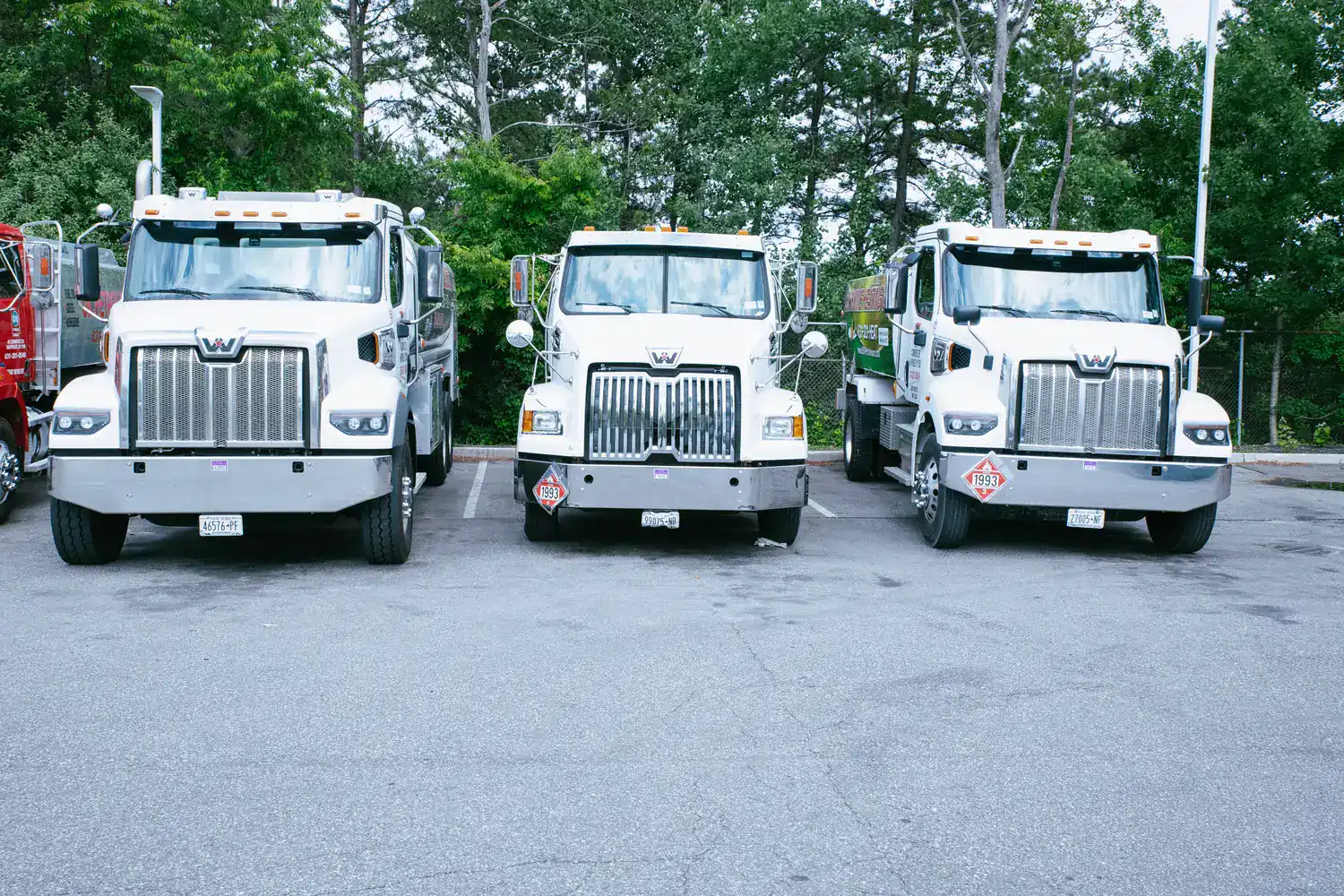
We've been delivering fuel to Nassau and Suffolk County homes since 1976. Kerosene is part of what we do — alongside heating oil, gasoline, and other fuel products — and we deliver it the same way we deliver everything else: on your schedule, in the quantity you specify, with no contract required for on-demand orders. You can place an order online, tell us exactly how many gallons you want, and pay without a phone call. It's a straightforward process that most people don't realize is available to them because they've only ever bought kerosene at retail.
The contrast with propane logistics is worth mentioning here too. Small propane tanks — the 20-pound cylinders used for grills and portable heaters — are easy to exchange at hardware stores and home improvement centers throughout Nassau County. That's genuinely convenient for low-volume use. But if you're running a propane heater regularly through a cold winter, you're swapping tanks frequently, and the per-gallon cost on small exchange tanks is high. Bulk propane delivery requires a permanent tank installation on your property, which adds infrastructure cost and complexity that most Nassau County homeowners using propane for supplemental heat don't want to take on.
For most Nassau County homeowners who want a reliable, cost-effective supplemental or backup heating fuel — especially for storm preparedness — delivered kerosene from a local supplier is the option that makes the most practical sense once you know it's available.
Which Heating Fuel Is Right for Your Long Island Home?
If you're heating a space that isn't connected to your home's central system — a garage, a workshop, a sunroom — or if you're thinking about what happens to your heat when the power goes out, kerosene is the stronger option for most Nassau County homeowners. More BTUs per gallon, no gelling in cold weather, simpler storage, and no tank infrastructure required. Propane has its place, particularly for lower-output indoor heaters and outdoor cooking, but for serious supplemental or backup heat, kerosene consistently delivers more.
The grade matters. K-1 is what you want. And the logistics matter too — bulk delivery is available, it's more cost-effective than retail, and it doesn't require a contract.
We've been delivering kerosene and heating oil to Nassau and Suffolk County homes since 1976, and we're happy to answer questions about what makes sense for your specific situation. If you're ready to order or just want to know more, OK Petroleum Distribution is a straightforward call or online order away.