


If you're running a business in Nassau County — managing a fleet, keeping equipment fueled on a job site, or trying to keep a commercial property's generator ready — you already know that fuel isn't something you think about until it becomes a problem. And when it becomes a problem, it's usually the worst possible time.
This guide isn't a sales pitch. It's a practical resource for Long Island business owners who want to make a smarter decision about where their diesel comes from, what to look for in a supplier, and what questions actually matter when you're evaluating your options.
What to Look for in a Diesel Supplier Serving Nassau County
The conversation around diesel suppliers usually starts with price — and that's fair. But experienced fleet managers and contractors across Nassau County will tell you the per-gallon rate is only part of the story. What you really pay for is reliability, and that only shows up after you've committed.
A missed delivery during a Nor'easter doesn't just mean cold equipment. It means idle crews, delayed projects, and customers calling to find out where their order is. In Nassau County, where businesses run tight schedules along corridors like Hempstead Turnpike and Sunrise Highway, a supplier who can't perform under pressure is a liability — not a savings.
How to Evaluate a Diesel Fuel Supplier Before You Commit
Start with longevity. A supplier who's been operating on Long Island for decades has navigated the supply disruptions, storm events, and demand spikes that come with this market. We've built routes, relationships, and infrastructure specific to Nassau County that newer or out-of-area operations can't replicate overnight.
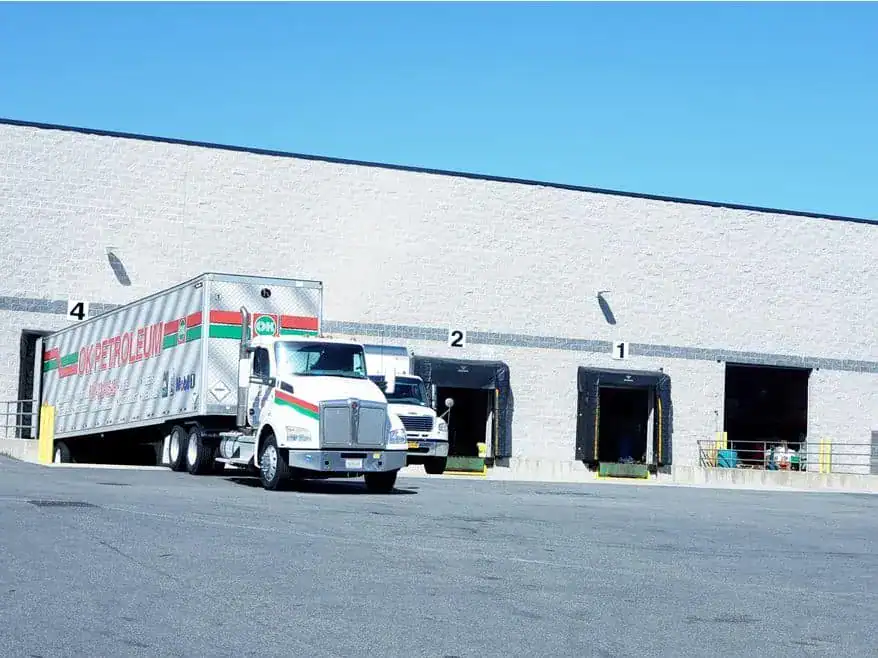
Next, look at how fuel actually gets delivered. There's a meaningful difference between a supplier who runs a dedicated fleet of trucks and one who subcontracts deliveries to whoever's available. Dedicated delivery means consistent drivers, consistent timing, and a clear line of accountability when something goes wrong. Ask directly: who's driving the truck, and who do you call if there's a problem?
Pricing transparency matters too, but not in the way most people think. You don't need the absolute lowest price — you need a price you can understand and predict. Hidden surcharges, minimum order fees, and off-hours premiums can quietly add up and make a "cheap" supplier significantly more expensive than a straightforward one. Look for a supplier whose ordering process is clear from the start, where you can specify exactly what you need and know what you're paying before the truck rolls.
Finally, think about product range. If your business needs diesel for equipment, motor oil for a fleet, and antifreeze for your vehicles, managing three separate vendor relationships creates real overhead. A supplier who can cover all of that from a single account simplifies your operation and often improves your pricing through volume. Nassau County's commercial base — from the industrial corridors in Plainview and Bethpage to the distribution operations in Westbury and Hicksville — is full of businesses that are still juggling multiple fuel vendors when they don't have to be.
One more thing worth asking: what happens during an emergency? Nassau County businesses learned a hard lesson during Hurricane Sandy in 2012, when multi-day outages left commercial properties scrambling for generator fuel. A supplier with emergency delivery capability and the infrastructure to respond isn't a luxury — it's a baseline requirement for any business that can't afford to go dark.
Mobile Fuel Delivery: What It Is and Why Nassau County Fleets Are Using It
Mobile fuel delivery — sometimes called on-site fueling or fleet fueling — means the fuel comes to your equipment, not the other way around. Instead of sending trucks to a pump or coordinating a separate fueling run, we deliver directly to your tank, your job site, or your fleet yard on a schedule that works for your operation.
For a lot of Nassau County businesses, this is the shift that actually changes how they think about fuel management. A landscaping company running crews across Garden City and Mineola doesn't have time to route trucks back to a pump between jobs. A construction contractor with equipment staged in Freeport or Baldwin can't always break the site schedule to handle fueling logistics. Mobile delivery removes that friction entirely.
It's worth understanding that mobile delivery isn't reserved for large-scale operations. A business with a handful of vehicles or a single piece of heavy equipment qualifies just as much as a 50-truck logistics fleet. The threshold is lower than most people assume, and the time savings are immediate.
The way it typically works: you establish an account with us, agree on delivery frequency or minimum levels, and we handle the rest. Some of our clients use predictive systems that monitor consumption patterns and schedule delivery before they run low — which means you're never making a last-minute call because a tank ran dry. Others operate on a will-call model, where you order when you need it and the delivery happens within an agreed window.
Both models have their place. The automatic approach works well for businesses with consistent, predictable fuel use — fleets that run regular routes, facilities with steady generator load, or equipment that runs on a fixed schedule. The on-demand model suits businesses where fuel needs vary week to week, where project-based work creates irregular consumption, or where the operator simply wants full control over timing and quantity without being locked into a contract.
The key is finding a supplier who offers both, so you can choose what fits your operation rather than being forced into a structure that doesn't.
Fuel Delivery Options for Long Island Businesses
The fuel delivery landscape on Long Island is more varied than most business owners realize. Beyond basic diesel delivery, we handle heating oil, motor oil, antifreeze, kerosene, and gasoline — giving Nassau County businesses the option to consolidate their fuel sourcing under one account.
For Nassau County businesses evaluating their options, the distinction matters. A supplier who only handles diesel is a partial solution. A supplier who can serve as your single commercial fuel partner — handling everything from fleet diesel to wholesale motor oil to heating oil for your facility — is a different kind of relationship, and a more valuable one.
What's the Difference Between On-Road and Off-Road Diesel?
This is one of the most common questions Nassau County business owners ask when they're setting up a commercial fuel account, and it's worth getting right because the consequences of ordering the wrong product go beyond mechanical issues.
On-road diesel — sometimes called clear diesel — is the fuel used in street-legal vehicles: delivery trucks, vans, buses, and any vehicle that operates on public roads. It's taxed at both the state and federal level, and it meets Ultra-Low Sulfur Diesel (ULSD) standards, which cap sulfur content at 15 parts per million. New York State requires ULSD for all on-road diesel, and we only provide compliant product for on-road use.
Off-road diesel — sometimes called dyed diesel because it's dyed red per EPA regulations — is tax-exempt and intended for equipment that doesn't operate on public roads: construction machinery, generators, agricultural equipment, and similar uses. The tax exemption is the reason it's cheaper, and the dye is how enforcement agencies verify it's being used correctly. Using off-road diesel in an on-road vehicle is a federal violation, and it's the kind of mistake that creates real legal exposure for a business.
We ask about your use case before processing an order. If you're fueling a mix of on-road vehicles and off-road equipment — which is common for construction companies and landscapers operating in Nassau County — you may need both products, and we can accommodate that without making it complicated.
If you're unsure which product applies to your operation, that's exactly the kind of question worth asking before you place your first order. We can answer it clearly and help you get set up correctly from the start.
Cheapest Diesel Fuel Near Me: What That Search Is Really Asking
When someone searches for the cheapest diesel fuel near them, what they're usually asking underneath that is: am I paying more than I should? That's a fair question, and it deserves a direct answer.
Diesel prices in Nassau County — like everywhere in the US — are tied to crude oil markets, refinery capacity, and seasonal demand cycles. The US Energy Information Administration tracked the national average at $4.061 per gallon in early April 2024, but local prices fluctuate around that baseline based on supply chain factors specific to the New York metro area. No supplier controls the commodity price. What we control is our markup, our fee structure, and whether we're transparent about both.
The businesses that consistently pay fair prices for diesel aren't the ones who shop for the lowest quote every month. They're the ones who've established a relationship with a supplier they trust, understand roughly what market rates look like, and know they're not being charged hidden fees on top of the base price. That kind of arrangement takes a little upfront effort to set up and pays off steadily over time.
There's also a total-cost argument worth making here. A supplier who charges slightly more per gallon but delivers reliably, responds quickly when something goes wrong, and handles multiple product categories from one account is almost always less expensive in practice than a cheaper supplier who misses deliveries, creates administrative headaches, or requires you to maintain separate vendor relationships for motor oil, antifreeze, and heating oil.
For Nassau County businesses — especially those operating fleets or equipment in towns like Hicksville, Bethpage, Plainview, or Freeport — the math tends to favor the reliable supplier over the cheapest one. The cost of a missed delivery, idle equipment, or a last-minute emergency order from a supplier you barely know almost always exceeds whatever you saved on the per-gallon rate.
What's worth looking for: a supplier who offers online ordering so you can see exactly what you're paying before you commit, no contracts on on-demand orders, and a clear policy on what happens if a delivery window is missed. Those three things tell you more about a supplier's actual pricing integrity than any quoted rate.
Finding the Right Diesel Supplier in Nassau County, NY
The right diesel supplier for your Nassau County business isn't necessarily the one with the flashiest website or the lowest opening quote. It's the one who shows up consistently, communicates clearly, handles your full range of fuel needs, and has the track record to back up what they say.
For businesses across Nassau County — from the commercial corridors in Garden City and Mineola to the industrial operations in Plainview and Bethpage — the difference between a good supplier and a frustrating one shows up in the details: delivery timing, product accuracy, billing clarity, and what happens when something unexpected comes up.
If you're evaluating your options or ready to make a change, OK Petroleum Distribution has been serving Long Island businesses since 1976. We're straightforward to work with, and we'll tell you exactly what we can do for your operation. Reach us at (631) 321-0549.