
Share:

When it comes to choosing a home heating oil delivery service, reliability should be at the forefront of your considerations. It’s crucial to select a service provider, like OK Petroleum, known for its dependability in delivering heating oil, come rain or shine. Their consistency in supply and adherence to delivery schedules provide a sense of security and peace of mind.
In addition to this, it’s essential to consider the provider’s ability to manage emergencies effectively. Emergencies and unforeseen situations can arise anytime, and a reliable provider should be equipped to handle such scenarios. A solid track record of managing crisis situations ensures you always keep a heat source in your home.
A cost-effective home heating oil delivery service is essential for managing your household expenses effectively. When selecting a service, opt for providers like OK Petroleum, that offer transparent pricing without hidden charges. This transparency allows you to budget effectively for your heating needs without any unpleasant surprises down the line.
Another element to consider is the pricing options that your provider offers. Many service providers offer price caps or budget plans, which can be beneficial for managing costs. It’s worth noting, however, that a low price should always maintain the quality of the service and the product. Opt for a provider that balances affordability with quality and reliability.
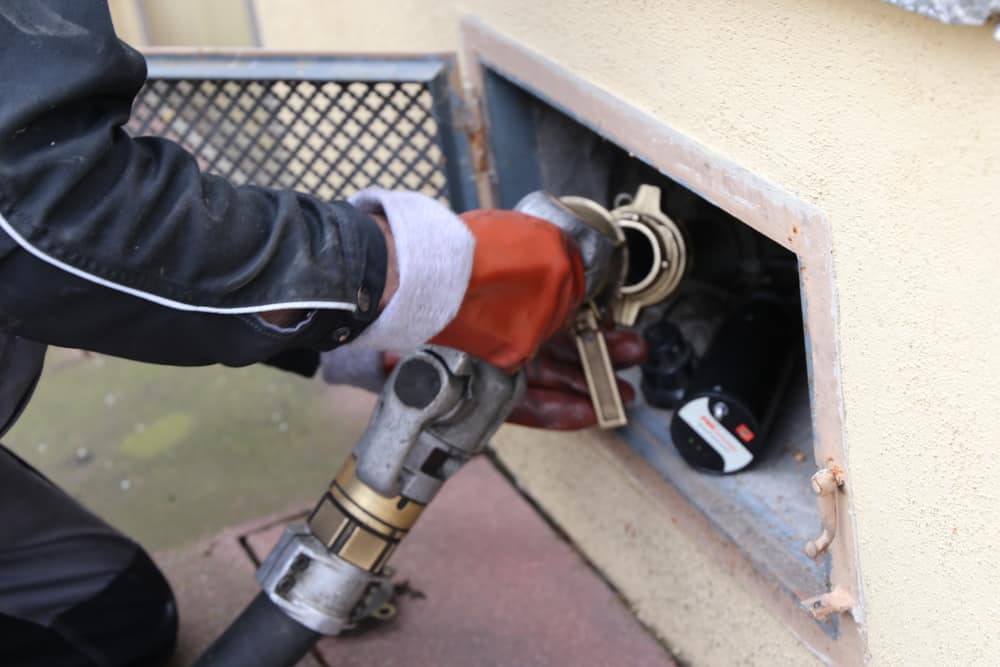
In today’s environmentally conscious world, eco-friendliness is a key consideration when choosing your home heating oil provider. Many service providers now offer options such as low-sulfur or biofuel-based heating oil, which burn cleaner and contribute less to environmental pollution. OK Petroleum is one such provider, demonstrating its commitment to environmental stewardship through its offerings.
In addition to being good for the environment, these eco-friendly options can also be more efficient, which could lead to lower heating costs in the long run. Therefore, choosing a service provider that prioritizes environmental responsibility can benefit both the planet and your wallet.

The quality of customer service offered by a heating oil delivery provider can be a distinguishing factor in your choice. A good service provider should be responsive, approachable, and dedicated to addressing your concerns. OK Petroleum prides itself on offering superior customer service with a team ready always to assist you.
Prompt communication and availability during emergencies are critical aspects of good customer service. This means your provider should be accessible and responsive when needed. This accessibility can provide a significant relief, especially in urgent situations or during peak heating seasons when demand is high.
Beyond heating oil delivery, a full-service provider should also offer technical support and maintenance services. Companies like OK Petroleum understand the importance of ensuring the efficiency and longevity of your heating system. Regular check-ups and preventive maintenance can keep your heating system running smoothly and avoid unexpected breakdowns.
Timely repairs are also an essential aspect of these services. When issues do arise, having a team ready to provide quick and effective solutions can save you from discomfort and inconvenience. These added services ensure the efficiency of your heating system and extend its lifespan, offering you excellent value for your investment.
The financial aspects of a home heating oil delivery service are another crucial consideration. OK Petroleum, for instance, provides a variety of payment options tailored to fit different financial needs and budgets. The ability to choose from prepayment and budget plans can provide flexibility and financial ease.
In addition to providing various payment plans, some service providers also offer price protection plans. These can be particularly beneficial during periods of price volatility, ensuring you avoid sudden spikes in heating costs. Considering these financial aspects can help alleviate stress and provide predictability in your heating expenses, particularly during peak heating season.
Summary:
Most furnace guides assume you have gas heat. They’re written for a different kind of home, in a different kind of market. But Nassau County isn’t most markets. The majority of homes here — Cape Cods, ranch houses, split-levels built in the postwar decades — were constructed before natural gas infrastructure reached Long Island, and most of them still run on heating oil today.
That creates a specific set of questions that generic HVAC content doesn’t answer well. What does a furnace repair actually cost for an oil system? What do you do when the tank runs dry and the furnace won’t restart? When does it make sense to replace the whole unit? And how does your fuel delivery relationship connect to all of it?
That’s what this guide covers.
Gas and oil furnaces share a lot in common — both burn fuel to produce heat, both need annual inspections, and both will fail without proper maintenance. But oil furnaces have a few specific requirements that gas systems don’t, and skipping them creates problems that are entirely preventable.
An oil furnace tune-up typically includes replacing the oil filter and nozzle, cleaning the combustion chamber, inspecting the heat exchanger for cracks, testing combustion efficiency, and checking the flue and chimney draft. A gas furnace tune-up skips the nozzle and filter replacement but adds its own steps around gas pressure and valve integrity. The process isn’t dramatically different, but the consumable parts — and the consequences of skipping them — are.
A standard furnace tune-up runs $70 to $200 for a basic visit, with annual maintenance packages ranging from $150 to $500 depending on what’s included and how thorough the provider is. Oil furnaces tend to fall toward the higher end of that range because the service involves more steps and more consumable parts than a comparable gas system inspection.
The question most homeowners ask is whether it’s worth it. The short answer: yes, consistently. Regular maintenance can reduce your heating bills by 10 to 30 percent by keeping the system running at peak efficiency. It also prevents the kinds of breakdowns that cost $200 to $600 to fix — and those are the average repair costs, not the emergency ones.
Here’s something that doesn’t get said enough: most oil furnace manufacturers require documented annual maintenance to keep the warranty valid. If you skip the service and something fails, you may be paying out of pocket for a repair that would otherwise have been covered. That’s a financial argument for maintenance that has nothing to do with efficiency or longevity — it’s just about protecting what you already own.
The other thing annual maintenance catches is safety issues. A cracked heat exchanger can allow combustion gases — including carbon monoxide — to enter your living space. A qualified technician will inspect the heat exchanger and test combustion performance as part of a standard service visit.
For Nassau County homeowners, the practical advice is to schedule your tune-up in August or September, before the heating season starts. Technicians have availability, parts are in stock, and you’re not competing with everyone else whose furnace just stopped working on the coldest day of the year.
Not all furnace service visits are created equal. A quality oil furnace inspection includes a written service report at the end — if you don’t receive one, that’s a meaningful signal about the depth of the work. The report should document what was replaced, what was tested, and what the combustion efficiency readings were. That documentation matters for warranty purposes and for tracking the system’s performance over time.
A thorough visit covers the oil filter and nozzle replacement (these are wear items that degrade with use), a combustion efficiency test measuring CO2, oxygen, smoke levels, and flue temperature, a heat exchanger inspection, lubrication of moving parts, a safety control test, and a check of the flue and chimney draft. If a provider is quoting you a very low price and skipping the combustion efficiency test or not replacing consumable parts, you’re paying for a less complete service than you think.
In Nassau County specifically, the postwar housing stock means a lot of homes are running furnaces that are 15, 20, or even 25 years old. On a system that age, the annual inspection isn’t just routine maintenance — it’s the difference between catching a developing problem early and getting hit with an emergency repair call in February. The older the system, the more important it is to have someone who actually knows oil-fired equipment doing the work, not a generalist who services mostly gas systems and treats your oil furnace as an afterthought.
When you’re evaluating providers, ask directly whether they specialize in oil-fired systems. Ask what the tune-up includes and whether you’ll receive a written report. Those two questions will tell you most of what you need to know about the quality of the service.
Furnace repairs for oil systems typically run $300 to $1,200 depending on what failed and when you need it fixed. The wide range reflects the difference between a straightforward component replacement and a more involved repair on an older system — and whether you’re calling during business hours or in the middle of a nor’easter.
Emergency and after-hours furnace repair is its own category. Expect to pay $300 to $1,200 for emergency service, with labor rates running $150 to $215 per hour for after-hours calls. Getting a technician to your Nassau County home at 11pm when it’s 20 degrees outside costs more than a daytime visit — that’s just the reality of the service. The most effective way to avoid those costs is the tune-up scheduled in September.
When homeowners in Nassau County start thinking about replacement, the question of switching fuels often comes up alongside it. It’s worth understanding what the numbers actually look like before assuming one path is obviously better.
A gas furnace replacement costs roughly $2,500 to $6,000 for the unit and installation — but that assumes you already have natural gas service at your home. In many parts of Nassau County, you don’t. Natural gas infrastructure on Long Island was limited during the postwar building boom, and significant portions of the county still don’t have access to gas distribution. If your home isn’t already connected, adding that infrastructure changes the cost calculation substantially.
Modern high-efficiency oil furnaces achieve AFUE ratings of 85 to 95 percent — meaning 85 to 95 cents of every dollar spent on fuel is converted to usable heat. Older units may operate at 60 to 70 percent AFUE, which means a meaningful portion of what you’re spending on oil is going up the flue. Upgrading to a high-efficiency oil furnace often pays for itself over time through fuel savings, even without switching fuels entirely.
The replacement decision should also account for the age of your current system, its repair history, and how it’s been maintained. A 22-year-old furnace that’s had annual service and is running efficiently is a different situation than a 15-year-old system that’s been neglected and is on its second major repair. There’s no universal answer — but the 50% rule gives you a practical starting point.
If you’re replacing a furnace in a Nassau County home, make sure the contractor you hire is licensed in New York State. Oil burner technicians in New York are required to hold a specific oil burner license. It’s worth asking before anyone starts the work.
Running out of heating oil is one of the most common — and most preventable — problems oil-heat homeowners deal with. It’s also one of the most stressful, because getting a delivery doesn’t automatically fix the problem. When a tank runs completely dry, air enters the fuel line, and the furnace won’t fire even after the oil arrives. This is the part most people don’t know until it happens to them.
The restart process involves bleeding the fuel line to purge the air that entered when the tank emptied. On many systems, you can attempt this yourself using the reset button on the burner — press it once, wait for the furnace to attempt ignition, and see if it fires. If it doesn’t fire after one or two attempts, stop. Pressing the reset button repeatedly when the furnace has flooded with oil creates a fire hazard. At that point, you need a technician to bleed the line manually.
Long Island’s exposure to nor’easters and winter storms means power outages are a real part of the heating season. Oil furnaces with electronic ignition — which is most systems installed in the last few decades — require electricity to operate. When the power goes out, the furnace shuts down. When it comes back on, the furnace should restart automatically in most cases.
If it doesn’t restart on its own after power is restored, the first step is checking the thermostat setting and making sure it’s set above the current room temperature. Then check the circuit breaker for the furnace. If both of those look fine, locate the reset button on the burner — it’s typically a small red button on the burner assembly — and press it once. Give the system a few minutes to attempt ignition.
The process for restarting a gas furnace after a power outage follows a similar sequence, though gas systems don’t have the fuel-line air issue that oil systems do. If your gas furnace doesn’t restart after a power outage, the pilot light or electronic ignition may need attention, but you’re not dealing with the same bleeding requirement.
For Nassau County homeowners, know where your reset button is before you need it. It’s one of those things that takes 30 seconds to locate when everything is working fine and feels impossible to find at midnight when your house is getting cold.
Article details:
Share:
Continue learning:
You can now order home heating oil even more conveniently by downloading our mobile app, available on the App Store and the Play Store.