

Share:
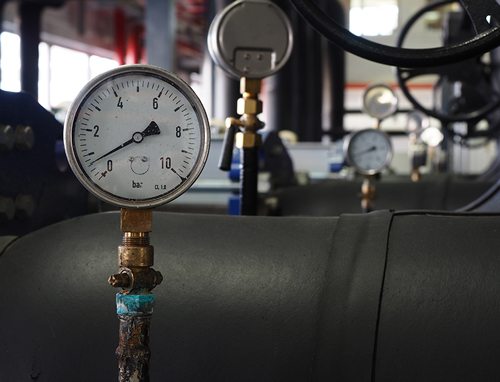
When it comes to choosing a home heating oil delivery service, reliability should be at the forefront of your considerations. It’s crucial to select a service provider, like OK Petroleum, known for its dependability in delivering heating oil, come rain or shine. Their consistency in supply and adherence to delivery schedules provide a sense of security and peace of mind.
In addition to this, it’s essential to consider the provider’s ability to manage emergencies effectively. Emergencies and unforeseen situations can arise anytime, and a reliable provider should be equipped to handle such scenarios. A solid track record of managing crisis situations ensures you always keep a heat source in your home.
A cost-effective home heating oil delivery service is essential for managing your household expenses effectively. When selecting a service, opt for providers like OK Petroleum, that offer transparent pricing without hidden charges. This transparency allows you to budget effectively for your heating needs without any unpleasant surprises down the line.
Another element to consider is the pricing options that your provider offers. Many service providers offer price caps or budget plans, which can be beneficial for managing costs. It’s worth noting, however, that a low price should always maintain the quality of the service and the product. Opt for a provider that balances affordability with quality and reliability.
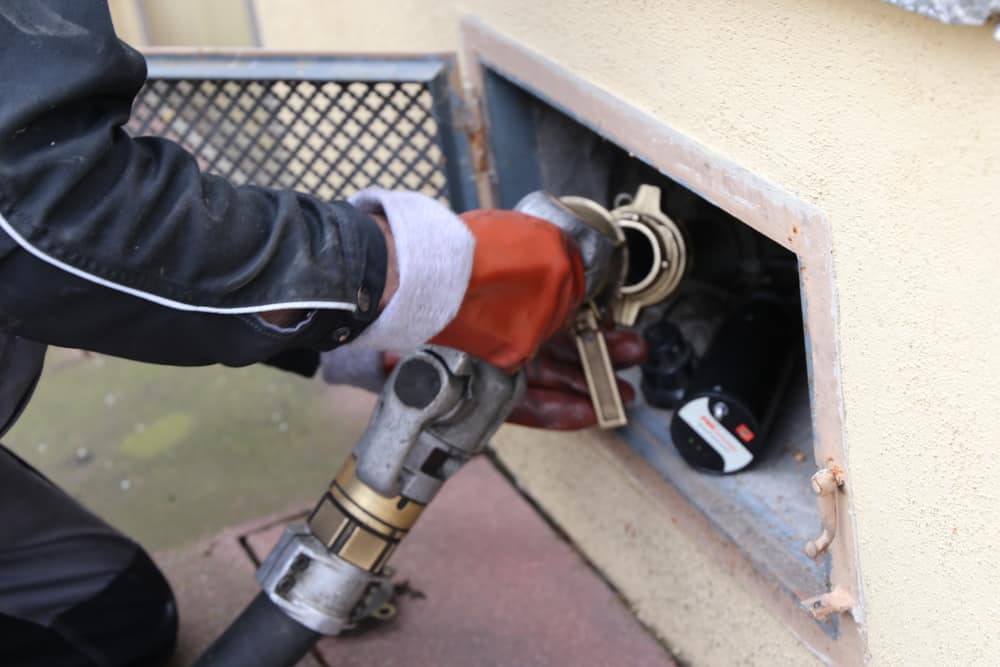
In today’s environmentally conscious world, eco-friendliness is a key consideration when choosing your home heating oil provider. Many service providers now offer options such as low-sulfur or biofuel-based heating oil, which burn cleaner and contribute less to environmental pollution. OK Petroleum is one such provider, demonstrating its commitment to environmental stewardship through its offerings.
In addition to being good for the environment, these eco-friendly options can also be more efficient, which could lead to lower heating costs in the long run. Therefore, choosing a service provider that prioritizes environmental responsibility can benefit both the planet and your wallet.

The quality of customer service offered by a heating oil delivery provider can be a distinguishing factor in your choice. A good service provider should be responsive, approachable, and dedicated to addressing your concerns. OK Petroleum prides itself on offering superior customer service with a team ready always to assist you.
Prompt communication and availability during emergencies are critical aspects of good customer service. This means your provider should be accessible and responsive when needed. This accessibility can provide a significant relief, especially in urgent situations or during peak heating seasons when demand is high.
Beyond heating oil delivery, a full-service provider should also offer technical support and maintenance services. Companies like OK Petroleum understand the importance of ensuring the efficiency and longevity of your heating system. Regular check-ups and preventive maintenance can keep your heating system running smoothly and avoid unexpected breakdowns.
Timely repairs are also an essential aspect of these services. When issues do arise, having a team ready to provide quick and effective solutions can save you from discomfort and inconvenience. These added services ensure the efficiency of your heating system and extend its lifespan, offering you excellent value for your investment.
The financial aspects of a home heating oil delivery service are another crucial consideration. OK Petroleum, for instance, provides a variety of payment options tailored to fit different financial needs and budgets. The ability to choose from prepayment and budget plans can provide flexibility and financial ease.
In addition to providing various payment plans, some service providers also offer price protection plans. These can be particularly beneficial during periods of price volatility, ensuring you avoid sudden spikes in heating costs. Considering these financial aspects can help alleviate stress and provide predictability in your heating expenses, particularly during peak heating season.
Summary:
Most people don’t give their oil tank a second thought until the heat stops working or they catch a whiff of something that shouldn’t be there. That’s understandable — it’s not exactly top of mind when you’re managing a household. But heating oil tanks don’t usually fail all at once. They give you signals first. The problem is, most homeowners don’t know what those signals look like until it’s too late. This guide covers the five most common warning signs that your tank needs a professional inspection, what that inspection actually involves, and why acting early is almost always cheaper than waiting.
Some of these signs are obvious. Others are easy to dismiss as “probably nothing.” The tricky part is that the most serious tank problems — internal corrosion, pinhole leaks at the bottom — are invisible from the outside until contamination has already started. So while you’re waiting for a clear sign, the damage may already be underway.
Here’s what to watch for. If you notice rust or discoloration on the tank’s exterior, that’s a red flag — especially along the seams or at the base. Surface rust on an older tank often indicates deeper corrosion working its way through the metal. A persistent smell of oil inside or near your home is another one that shouldn’t be ignored, even if you can’t locate the source. Oil has a distinct odor, and even a slow drip from a fitting or a hairline crack in a supply line will make itself known that way before it becomes visible.
Wet spots or staining on the floor near the tank, soft or shifting ground around an outdoor tank, and a gauge that reads differently than your recent delivery history suggest — these are all worth a professional set of eyes. And if your tank is more than 20 years old and has never been formally inspected, that alone is reason enough to schedule one.
This is the part that catches most homeowners off guard. You can walk past your tank every day, see no visible leaks, no obvious rust on the outside, and still have a tank that’s failing from the inside. The reason is moisture.
Certain heating oil blends are hygroscopic, meaning they absorb water vapor over time. That moisture settles at the bottom of the tank — and water sitting on bare steel is a recipe for corrosion. It works slowly, from the inside out, forming pinhole leaks at the tank bottom that are completely invisible from the exterior. By the time you see anything on the outside — staining, seepage, a soft patch of soil beneath an outdoor tank — the contamination has often already reached the surrounding ground.
This is why the absence of visible problems doesn’t mean your tank is fine. It means you haven’t seen the problem yet. A professional inspection gets underneath that assumption. Our technicians will check the tank’s seams, examine the bottom and foundation, test the supply lines along their full length, verify the gauge and vent are functional, and assess the overall age and condition of the system. For tanks that have been in service for 15 years or more, that kind of thorough evaluation isn’t optional — it’s just smart.
In Nassau County, where a significant portion of the housing stock dates back to the postwar decades, this matters more than it might in a newer suburb. Homes in communities like Levittown, Merrick, Bellmore, and Wantagh were built with oil heating systems that are now anywhere from 40 to 70 years old. Some of those original tanks are still in service. If you don’t know the history of your tank — and many homeowners who bought an older home don’t — an inspection is the only way to find out what you’re actually dealing with.
The other thing worth knowing: Nassau County sits directly above Long Island’s sole-source aquifer, the primary drinking water supply for the entire island. A leaking tank doesn’t just damage your property. It has the potential to reach the groundwater beneath it. That’s the local reality, and it’s part of why Nassau County takes petroleum storage seriously enough to administer its own regulatory program through the Nassau County Department of Health, separate from and sometimes stricter than state-level rules.
This is one of the most important questions Nassau County homeowners can ask — and the answer is often not what they’re hoping to hear. Many standard homeowner’s insurance policies include what’s called a pollution exclusion clause. Under that language, the cost of cleaning up an oil spill or contamination on your property is explicitly not covered. The New York State Department of Environmental Conservation has warned homeowners about exactly this, noting that when a tank leaks, “if your homeowner’s insurance policy contains a pollution exclusion clause — which many do — you could get stuck with the bill.”
And that bill can be significant. A minor leak requiring soil remediation typically runs somewhere between $10,000 and $20,000. If the contamination has spread further — into neighboring soil, toward the water table, or across property lines — costs can climb well past $100,000. A straightforward tank removal with no leak detected runs around $2,500. The math on proactive inspection is not complicated.
In Nassau County specifically, there’s an added layer of regulatory responsibility. Petroleum spills must be reported to both the NYSDEC spill hotline and the Nassau County Department of Health within two hours of discovery. That clock starts the moment you’re aware of a problem — not when you get around to making calls. Knowing this in advance, and having a fuel supplier with genuine local knowledge of how the county’s system works, makes a real difference when something goes wrong.
We’ve been delivering heating oil across Nassau and Suffolk Counties since 1976. That’s not just a number — it means we’ve seen what happens when tanks fail, we know how the local regulatory process works, and we understand what Nassau County homeowners are actually up against. When you’re working with someone who has been on these roads, in these neighborhoods, for over four decades, you’re not explaining your situation to a stranger.
An oil tank inspection is a single event. Oil tank maintenance is the ongoing practice that keeps your system running safely between those inspections. The two work together, and skipping either one is how small, manageable issues become expensive emergencies.
The baseline recommendation from industry professionals is straightforward: have your tank professionally inspected at least once a year, schedule a cleaning roughly every five years to remove accumulated sludge and water from the bottom, and get a thorough professional evaluation once the tank has been in service for around 15 years. If you’re in an older Nassau County home and you’re not sure when the tank was last serviced — or if it’s ever been serviced — start there.
Annual maintenance also means keeping an eye on the small things yourself: checking that the vent pipe is clear of obstructions, making sure the fill cap seals properly, and noting any changes in how the system is running. If your burner is cycling more frequently, if your fuel consumption seems higher than it should be for the weather, or if you’re noticing soot or unusual odors near the furnace, those are all worth flagging.
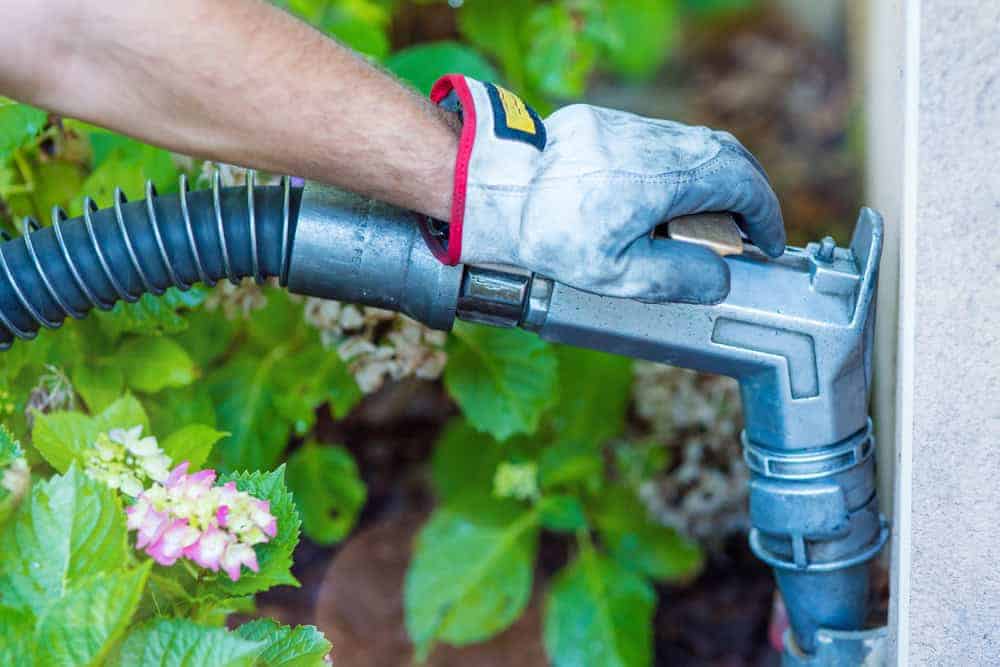
If you’ve upgraded to a high efficiency oil burner — or you’re considering one — the condition of your tank matters more than most people realize. A high efficiency burner is engineered to extract maximum heat from every gallon of fuel. It operates with tighter tolerances and more precise fuel delivery than older systems. That precision is exactly what makes it efficient. And it’s also what makes it sensitive to contaminated fuel.
When a tank has accumulated water at the bottom, or when sludge has built up from years of sediment settling, that material gets drawn into the fuel line. It reaches the filter, clogs it faster than it should, and in some cases gets past it and into the burner itself. The result is reduced efficiency, more frequent service calls, and a shorter lifespan for a piece of equipment you paid good money to install.
Think of it this way: a high efficiency burner running on clean fuel from a well-maintained tank can last 20 to 30 years. The same burner running on degraded fuel from a neglected tank will wear out faster, burn less efficiently, and cost you more in service and repairs over time. The investment you made in a better burner is only fully realized if the system feeding it is in good shape.
This is one of the reasons we think about tank health and fuel delivery as connected — not separate. We’ve been delivering heating oil to homes in Garden City, Mineola, Massapequa, Plainview, and dozens of other Nassau County communities for over 40 years. When we fill your tank, we’re not just dropping off fuel. We’re part of a system that either works well or doesn’t, depending on how well that system is maintained. A tank that’s never been inspected is a variable that works against everything else you’re doing to keep your heating costs reasonable.
The efficiency conversation also extends to fuel quality. We offer ultra-low-sulfur heating oil and biofuel-based options that burn cleaner and produce fewer deposits than older formulations. For homeowners who have invested in a modern, high efficiency system, the fuel going into that system is worth paying attention to. Cleaner fuel means cleaner combustion, less residue in the heat exchanger, and a burner that keeps performing the way it was designed to.
This question comes up often, and the honest answer is that the gap in cost between planned and unplanned tank work is substantial. When you replace a tank on your own timeline — because an inspection revealed it was approaching the end of its useful life, or because you decided to proactively upgrade a 25-year-old system — you control the process. You get quotes, you schedule at a convenient time, and the job is a straightforward removal and installation. That typically runs in the range of $2,500 for removal alone, with installation costs added depending on the new setup.
When a tank fails unexpectedly — or worse, when a slow leak is discovered that’s already reached the surrounding soil — the situation changes entirely. Now you’re looking at emergency removal, soil testing, possible remediation, and in some cases, work that extends to neighboring properties if contamination has spread. Remediation costs in Nassau County for a contained leak start around $10,000 to $20,000. If the contamination has reached groundwater or spread beyond your property line, six-figure costs are not hypothetical.
There’s also the timing factor. Nassau County winters are not forgiving. A tank failure in January — or a leak discovered during a real estate inspection when you’re trying to close on a sale — puts you in a position where you have no leverage and no time. Deals have fallen apart over oil tank issues. Closings have been delayed for months while remediation was completed. Sellers who discovered the problem themselves, addressed it proactively, and had documentation to show buyers were in a far better position than those who found out during the buyer’s inspection.
The point is that the inspection you schedule this fall — before the heating season starts, before the ground freezes, before you’re under any kind of pressure — is the version of this story that costs the least and ends the best. We offer automatic delivery and will-call service with no contracts and no extra fees, and we’re available at (631) 321-0549 if you want to talk through where your system stands.
The short answer: before you need one. The fall window — September through November — is the most important time for Nassau County homeowners to confirm their tank is in good shape before the heating season begins in earnest. If your tank hasn’t been inspected in the past year, if it’s more than 15 years old, or if you’ve noticed any of the warning signs covered here, that’s your answer.
A tank that’s well-maintained can last up to 30 years. One that’s been ignored can fail well before that — quietly, invisibly, and expensively. The inspection itself is a small investment relative to what it protects.
We’ve been serving Nassau County homeowners since 1976 — from Levittown to Long Beach, from Manhasset to Massapequa. If you have questions about your tank, your heating system, or your fuel delivery options, we’re a straightforward call or click away. Reach us at (631) 321-0549.
Continue learning:
You can now order home heating oil even more conveniently by downloading our mobile app, available on the App Store and the Play Store.
